
SPIKEURBAN delivers evidence-based intelligence for organisations making high-impact spatial decisions.
We help organisations design and operate spaces that:
• create measurable value and competitive advantage
• treat human performance, experience and risk as quantifiable performance variables
• adapt to environmental, social, and spatial constraints
Our work integrates experimental research, quantitative analytics, and digital sensing technologies to transform scientific insight into actionable tools for strategy, design, and investment.
Across all services, we combine spatial intelligence with objective human sensing to enable better decisions, reduced uncertainty, and higher-performing environments.
ENVIROMENTAL NEUROSCIENCE
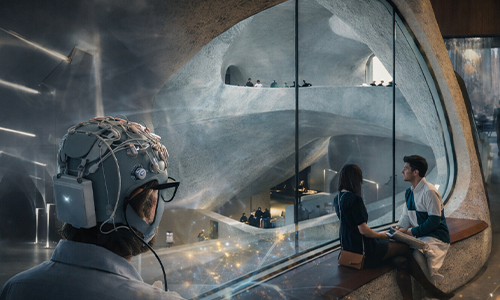
SPIKEURBAN emerged from a shared realization by its co-founders that today’s societal and business challenges cannot be effectively addressed by studying people or places in isolation. Decisions about cities, buildings, and infrastructures shape how people behave, interact, and perform – but human actions, in turn, continuously reshape environments, their functioning, and their long-term value.
SPIKEURBAN was created to capture and analyse these dynamic human-environment interactions. Understanding this two-way relationship requires insight into how environments influence perception, cognition, and action; and how patterns of human behaviour and decision-making continuously shape spatial performance, environmental conditions, and social relations over time.
SPIKEURBAN integrates environmental neuroscience with advanced urban and geospatial methods to support evidence-informed design, planning, and management processes. Our work is supported by a multidisciplinary network of scientific advisors and partners from academia, professional practice, and innovation ecosystems, spanning microclimate, mobility, neuroarchitecture, and design.
SPIKEURBAN enables organisations to use scientific and analytical knowledge as a strategic asset. Such approach strengthens decision-making, supports adaptive strategies, and delivers solutions that align human experience, environmental performance, and organisational objectives in real-world urban and architectural contexts.
for organisations
SPIKEURBAN provides decision intelligence for organisations investing in design and operating complex spatial assets.
Our work combines scientific knowledge, research methods, quantitative analytics, and digital sensing technologies to support informed, efficient, and defensible decisions about space. This approach provides a robust analytical foundation to design, evaluate, and manage urban and architectural environments in ways that are measurable, scalable, and aligned with organisational objectives.
This enables organisations to:
• reduce uncertainty in spatial planning, design, and investment decisions
• identify and capture value embedded in the way spaces are designed and used
• respond effectively to environmental, social, and spatial constraints
• integrate human experience, health, and well-being as quantifiable performance dimensions
Our services are structured across two complementary domains — NeuroUrbanism and NeuroArchitecture — addressing spatial decision-making from the urban scale to the building and interior scale.
Across both domains, spatial intelligence is integrated with objective human sensing to deliver decision-ready insights that support stronger strategies, more robust solutions, and higher-performing environments.
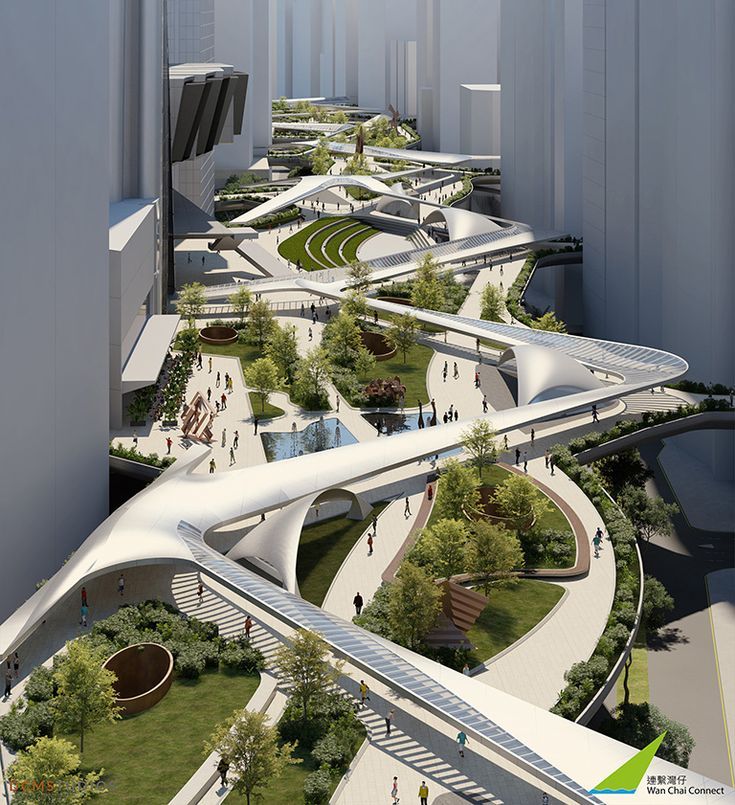
NeuroUrbanism examines cities as dynamic systems shaped by continuous interaction between people and space.
At SPIKEURBAN , we integrate Geospatial Intelligence and Urban analytics with Environmental Neuroscience to understand not only how urban environments influence behaviour, experience, and performance – but also how patterns of movement, use, and decision-making actively shape the functioning, value, and long-term performance of city spaces.

NeuroUrbanism examines cities as dynamic systems shaped by continuous interaction between people and space.
At SPIKEURBAN , we integrate Geospatial Intelligence and Urban analytics with Environmental Neuroscience to understand not only how urban environments influence behaviour, experience, and performance – but also how patterns of movement, use, and decision-making actively shape the functioning, value, and long-term performance of city spaces.
ENVIROMENTAL NEUROSCIENCE
PAULO MORGADO
CO-FOUNDER
Geographer and Geographic Information Scientist, Associate Professor at the Institute of Geography and Spatial Planning (IGOT), University of Lisbon; and researcher at the Centre of Geographical Studies and member of the Associated Laboratory TERRA.
Holds a PhD in Urban and Regional Planning from the University of Lisbon. His doctoral work focused on advanced spatial network analysis, including the development of a GIS plug-in based on graph theory and complex networks to quantify accessibility and connectivity patterns.
Co-coordinator of a Horizon 2020 project (eMOTIONAL Cities) and leader of work packages and tasks in several Horizon Europe projects. Former visiting researcher at the Centre for Advanced Spatial Analysis (UCL) and visiting scholar at the Department of Land Economy, University of Cambridge.
His research explores complex interactions between people and physical, digital, and hybrid environments, with the aim of producing scientific evidence to support sustainable urban development, health, and well-being. His work emphasizes advanced spatial analytics and emerging technologies – ranging from NeuroUrbanism and people-sensing approaches to remote sensing, participatory GIS, virtual reality, and real-time urban systems.
For clients, this means access to advanced spatial analytics that explain not only where activity occurs, but why spatial performance varies – and how it can be optimised.


BRUNO MIRANDA
CO-FOUNDER
A neurologist and senior neuroscientist at the Institute of Physiology, Lisbon School of Medicine, University of Lisbon; and researcher at the Medicine ULisboa for Health, Clinical Research and Innovation.
His doctoral research focused on the computational and neural mechanisms underlying of distinct human decision-making and reinforcement learning. Holds a PhD in Neuroscience from University College London, completed within the International Neuroscience Doctoral Programme at the Champalimaud Foundation.
Co-coordinator of a major international Horizon 2020 European project (eMOTIONAL Cities), recognized by the European Commission for innovation excellence. Principal Investigator of nationally funded projects in digital health, and researcher in multiple national and research initiatives.
Current research focuses on transdisciplinary approaches that integrate cutting-edge Environmental Neuroscience & Psychology tools and analytics into urban planning (NeuroUrbanism) and architecture (NeuroArchitecture), with the goal of advancing mental health, well-being, and human-environment interactions.
For clients, this ensures that decisions about space are grounded in objective evidence about how environments shape perception, behaviour, and performance in real-world conditions
SPIKEURBAN is guided by a multidisciplinary advisory board whose expertise strengthens the scientific rigor, spatial depth, and real-world relevance of our work. Our advisors contribute critical knowledge across climate, mobility, neuroarchitecture, and urban design, supporting evidence-based solutions.
SPIKEURBAN is strengthened by a carefully selected network of collaborators who share their commitment to evidence-based design and innovation. In previous projects, we collaborated to enhance our ability to bring science into impactful urban and architectural solutions.

Through our collaboration with the Portuguese Academy of Neuroarchitecture, we contribute to the dissemination, professional practice, and advancement of neuroscience-informed design within architecture and the built environment.

Together with Neurogears (UK), we have developed a wearable sensing technology to capture physiological and behavioural responses in real-world settings, supporting objective, data-driven assessments of environmental impact.

We have collaborated with X-Topia (USA) on forward-looking urban & architectural innovation projects, combining strategic design thinking with scientific and spatial intelligence to explore new models for healthier, more resilient…

We actively collaborate with MLsquared (Denmark) to provide advanced artificial intelligence and machine-learning methods to process complex, multimodal datasets, enabling scalable analytics and predictive insights for urban and architectural decision-making.

Teresa Ribeiro is an architect and real-estate developer, and Founder and President of the Portuguese Academy of Neuroarchitecture. Her work bridges neuroscience and architectural practice, reinforcing our mission to translate…

António Lopes is a geographer specializing in urban climatology and environmental processes. His expertise in micro- and meso-scale meteorological modelling, climate risks, and urban ecology supports our work on microclimate…

Nuno Marques da Costa brings deep expertise in transport and mobility systems, urban and regional analysis, and GIS-based transport modelling. His contribution is central to projects addressing mobility, accessibility, and…

Ana Bonifácio is an architect, urban planner, and visual artist, with expertise in public space design, placemaking, and urban regeneration. Her interdisciplinary perspective strengthens our focus on lived experience, spatial…